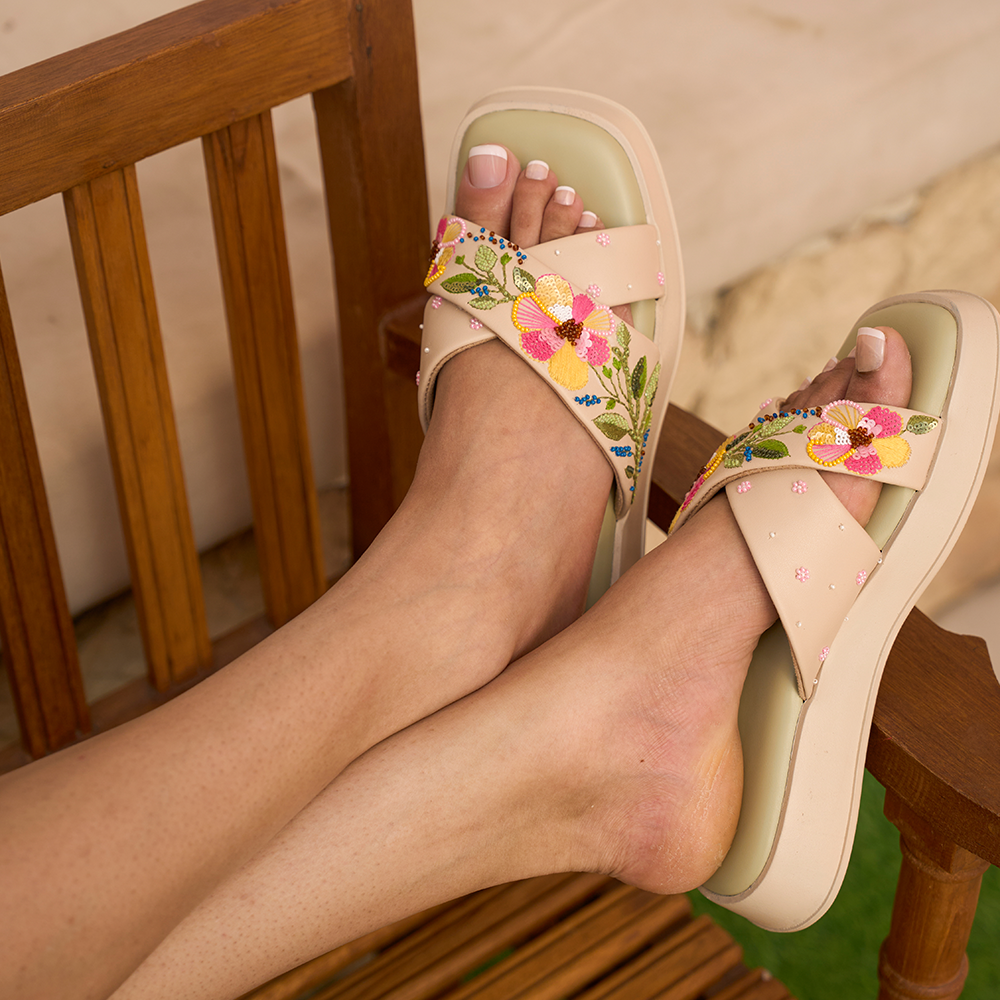
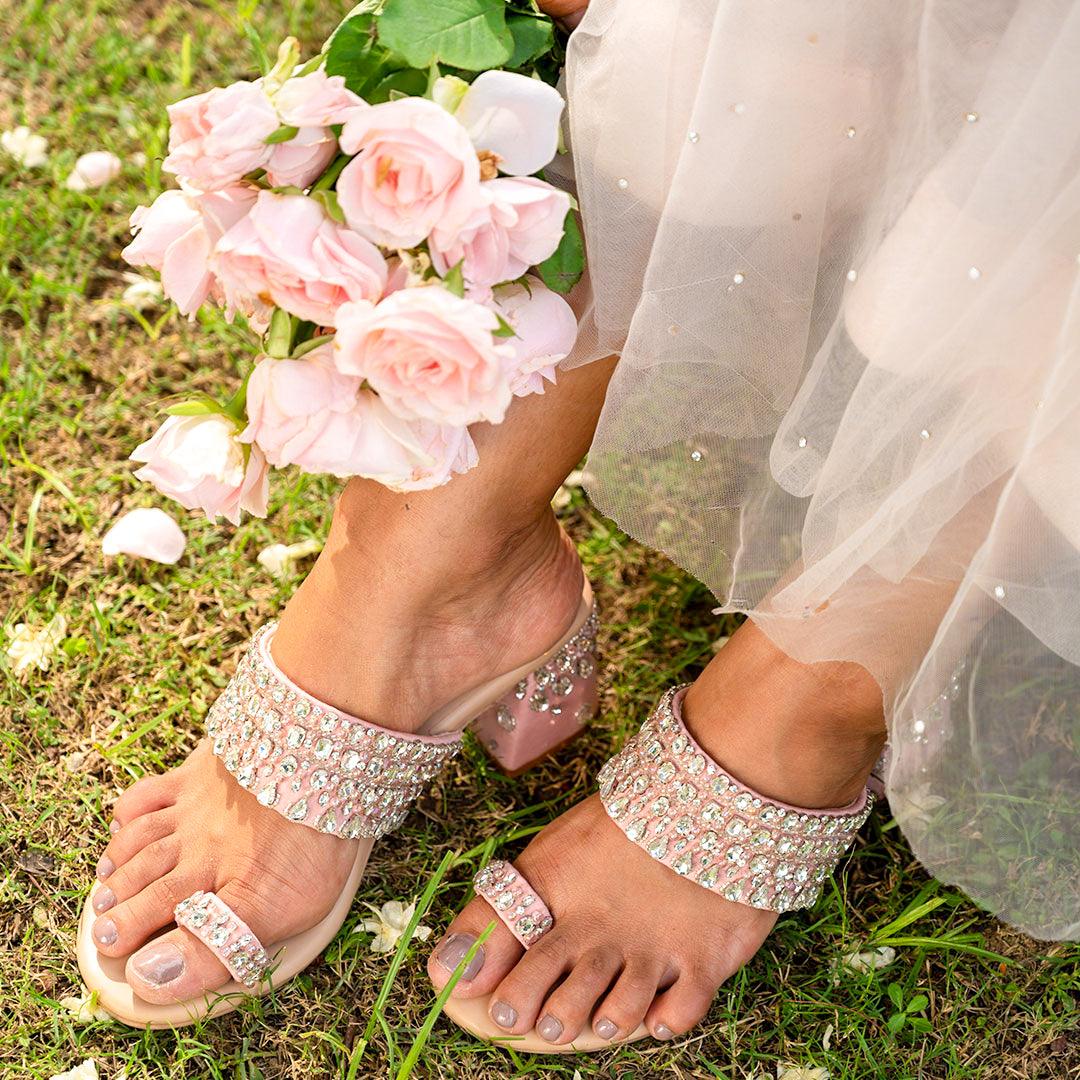
Bridal footwear is one of the most underestimated wedding decisions — not because shoes don't matter, but because they're often chosen at the very end. After the outfit. After the fittings. After the trials. Footwear is expected to fall into place quietly, without demanding attention. But for many brides, it doesn't. Indian weddings are long, layered, and physically demanding: there is standing, sitting, walking, waiting, dancing, and repeating all of it across multiple events. Footwear that looks perfect in photos often struggles in real life. This guide exists to help you understand that reality clearly — without pressure and without forcing you into one "correct" answer.
The Science of the Stiletto
Why does this hurt so much?
When you wear a 4-inch stiletto, 90% of your body weight shifts to the ball of your foot. In a heavy bridal lehenga, this pressure compounds with every step. The metatarsals compress, the soft tissue swells, and the nerve endings in your forefoot send increasingly urgent warnings. This is why "breaking them in" rarely works — you can't break in physics.
After 2–3 hours, most brides describe a specific burning sensation across the ball of the foot. After 5–6 hours, this becomes shooting pain. By hour 8, some brides have developed stress fractures they didn't know about until the honeymoon. That is not a dramatic statistic. That is podiatry.
"Pain after 2–3 hours in heels is completely normal. Pain that shoots, tingles, or makes you limp? That is a red flag your body is sending — and it deserves to be heard before your wedding day."— House of Vitti India · Bridal Guide
Articles in This Series

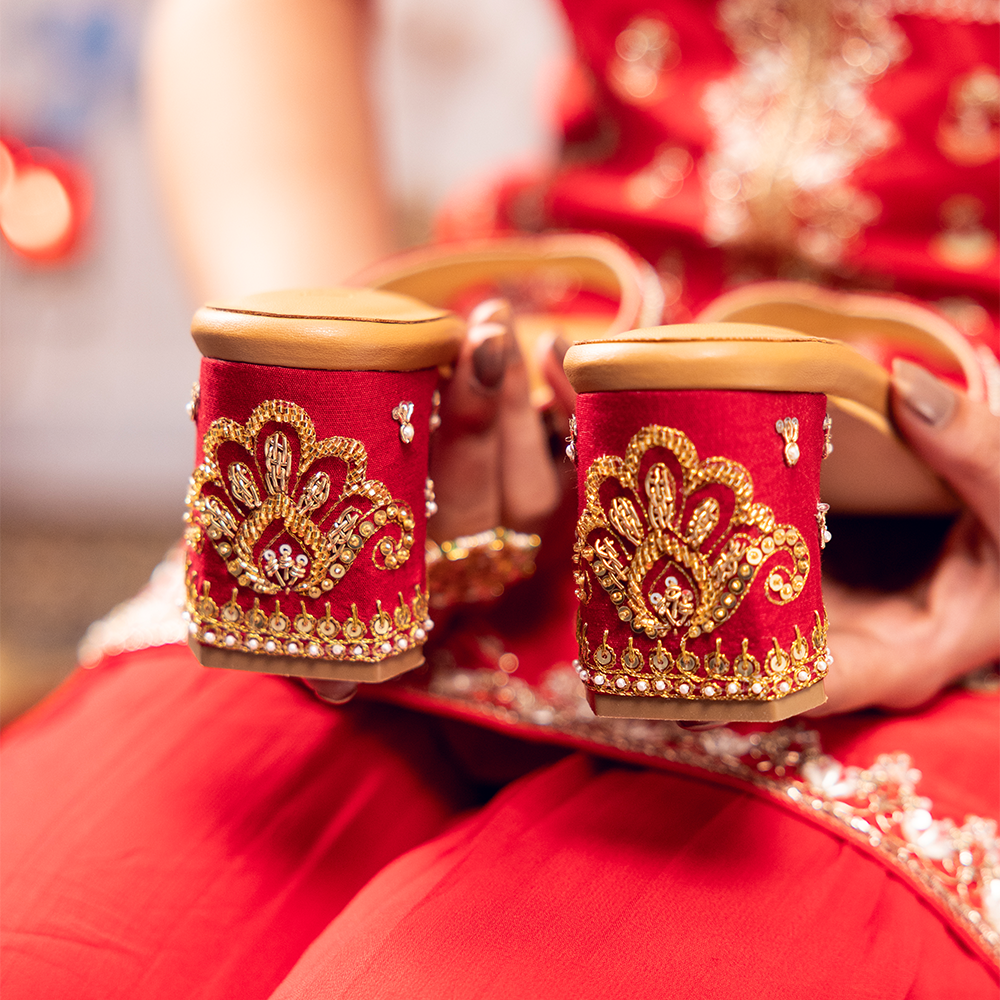
HEER HEELS (Red that speaks of eternal love, passion, and folk romance)
Intricate zardozi embroidery on a deep red silk base. Perfect for bridal trousseau, weddings, or festive occasions. Adds timeless elegance and sophistication to every step. Style with lehengas, sarees, or festive gowns for a statement look. Pair with reds for...
Rs 5,190.00
CHAAND BANNO HEELS (Mirrors and gold that glow like a bride kissed by the moon)
Rs 5,990.00 Shop Now →
PADMINI HEELS (A blooming lotus woven in threads of grace and timeless charm)
Rs 5,590.00 Shop Now →
ALBELI HEELS (Playful pink-orange hues for the muse who walks her own rhythm)
Rs 5,190.00 Shop Now →The Authentic Alternatives
Do I really need heels?
Short answer: absolutely not. The idea that every bride must wear heels is a surprisingly recent cultural import. Juttis, Kolhapuris, and flat embroidered sandals have adorned bridal feet for centuries — and they are not a compromise. They are the original bridal footwear of this subcontinent.
Juttis
The most culturally authentic bridal choice. Embroidered, embellished, and designed to be worn for hours. Stunning in photos — and your feet will thank you.
Wedges
Best heel option for Indian functions. Full sole support, no ankle instability on grass or uneven mandap ground. Gives height without the penalty.
Block Heels
Significantly more stable than stilettos. Distributes weight evenly across the heel. The smart bride's beautiful, photogenic compromise.
Stilettos
Stunning in photographs. Reserve for a 2-hour reception appearance — not an all-day ritual shoe under a 6-kg lehenga on grass.
Read More in This Series

GOLD MAHAARA JUTTI
Crafted on a dark beige silk base with a princess-inspired silhouette and gold zari jaal detailing. Features a central cutdana motif with scalloped embroidery and refined gold accents throughout. A graceful gold jutti designed for understated royalty. Styling tip: Pair...
Rs 5,990.00


Event-by-Event Logistics
Different events, different feet
One of the biggest mistakes brides make is selecting a single pair for every function. A pragmatic bride plans footwear the same way she plans outfits — per occasion. Indian weddings typically span 3–5 events, each with radically different demands on your feet.
Sangeet & Mehendi
- Best footwear for dancing at sangeet
- Why heels fail at mehendi events
- Wedges vs flats for dance-heavy functions
Reception Night
- Can you wear juttis to a reception?
- Dressy footwear that doesn't hurt
- Photo-friendly footwear without heels
Wedding Ceremony
- Footwear for long rituals & standing
- What works best for pheras & sat-phere
- Why grass + heels = disaster
For the sangeet, you'll be dancing — any heel above 2 inches is a liability. For the ceremony, you'll be sitting cross-legged, standing, walking barefoot on uneven ground, and managing metres of fabric. For the reception, this is your photograph moment — elevated footwear reads better in posed shots, but only for the duration of photos.

Pearl Mirage Wedges
Our ivory wedges combine timeless elegance with a modern edge. Crafted on a light nude base, they are adorned with pearls, transparent crystals, silver zari, and ivory cut dana. Intricate aari and zardozi embroidery elevate their rich, traditional design. The...
Rs 7,190.00


The Outfit Problem
My outfit is forcing bad shoe decisions
The most common bridal crisis: "My lehenga is too long and my tailor says I need heels." Here is what your tailor may not have told you — lehengas can be hemmed. And they have been worn with flat juttis by Indian brides for centuries without anyone's outfit dragging.
The real issue is timing. By the time the hemming conversation happens, the lehenga is already stitched and the shoes haven't been bought. Solve this by deciding your footwear first, then having your final fitting with shoes on. This one scheduling shift eliminates months of stress.
When Your Feet Are Different
My feet aren't "normal"
Most wedding footwear advice is written for a narrow, medium-width foot with a neutral arch. If your feet don't match that template — and millions don't — the standard advice fails you entirely. Here's condition-specific guidance.
Go Half-Size Up + Wide Fit
Never compromise on width for a wedding. Juttis and Kolhapuris often accommodate wider feet naturally due to their traditional cut and flexible leather.
Structured Arch Support
Heels strain flat feet more aggressively than flats do. Look for wedges with built-in structure or add a custom orthotic insert before the day.
Avoid Both Extremes
A 1–1.5 inch heel with good cushioning is typically most comfortable. Consult your physiotherapist at least 6 weeks before your wedding.
Size Up + Open Styles
Feet swell up to half a size during long events. Always buy bridal shoes in the afternoon when your feet are naturally at their largest.
Planning the Timeline
What should I do, and when?
Buy your bridal shoes at least 8–12 weeks before your wedding. This gives you time to wear them around the house, identify pressure points, exchange if needed, and coordinate the final lehenga hem with your actual shoe height. The most expensive mistake brides make is buying shoes two weeks out.
On pairs: two minimum for a multi-day wedding. Your ceremony pair (beautiful, reserve-worthy, changed into only for photos and key moments) and a dancing/comfort pair for sangeet and long rituals. Practical brides bring a third — embroidered flats or juttis to change into mid-reception.
The Comfort Hack Report
What actually works vs wishful thinking
The bridal comfort product market is enormous and only partially honest. Below is a clear-eyed verdict on the most popular hacks — no sponsorships, no sugarcoating.
Metatarsal Gel Pads
Placed behind the ball of the foot, these genuinely redistribute pressure. Test for 3+ hours before the day to make sure they don't shift inside your shoe.
Cushioning Insoles
Effective in shoes with no internal padding. But adding bulk to a snug shoe creates new pressure points. Never add on the day without testing first.
Blister Prevention Tape
Moleskin applied preemptively to known friction points genuinely prevents blisters. Apply before putting shoes on, not after soreness has already started.
Numbing Sprays
These mask pain signals that exist to protect you. Real tissue damage can occur undetected. Do not use for all-day events under any circumstances.
Permission to Choose Joy
Is it okay to prioritize comfort?
Let's address what's actually keeping you up at night — not the logistics, but the judgment. The quiet worry that if you wear flats, someone will notice. That choosing comfort signals you care less. That tradition demands suffering.
It doesn't. It never did. Indian bridal tradition — centuries of it — centred on juttis, Kolhapuris, and flat embroidered footwear. The stiletto-as-bridal-standard is a modern Western import. You are not abandoning tradition by choosing comfort. You are, in fact, returning to it.
"Will guests notice if I don't wear heels?"
In 10 years, no one will remember your shoe choice. They will remember your face. Your joy. Your tears during the vidai. Wear what lets those things live freely on your face all day.
You Are Not Alone — Read These

GHUNGHROO TALES JUTTI
Ghunghroo Tales Jutti - Crafted exclusively for Sakshi Sindwani’s Lohri celebration, the Ghunghroo Tales Jutti effortlessly blends heritage and modern charm. Inspired by the festival’s joyous spirit, this jutti features timeless zardozi embroidery and playful ghunghroos that dance with every...
Rs 6,690.00